Troubleshooting · dryers · no heat
Rosemount dryer not heating: tumbling cold and what it means
The drum turns, the timer counts down, and the clothes come out as wet as they went in. For a Rosemount dryer, gas or electric, a cold drum usually comes down to one of five parts.
- $89 diagnostic, counted inside the repair you approve
- One written price before any work begins
- Monday through Saturday, same-day when we can
- Electric dryersNeed both halves of a 240-volt circuit
- Gas dryersIgniter, flame sensor and gas valve coils
- Usual rootRestricted vent airflow behind the failed part
Safe checks first
Safe checks before you book
- Electric dryer: find the double breaker, switch it fully off and back on; one tripped half spins the drum without heat.
- Confirm the dial or display is not on air fluff, no heat, wrinkle care or a low delicate setting.
- Clean the lint screen and watch for a check-vent or airflow warning on the control panel.
- With the dryer running, step outside and feel for warm air pushing the vent hood flap open.
- In winter, clear snow, ice and frost from around the outdoor hood; a single drift can seal the vent shut.
- On a gas dryer, leave the gas line and valve alone; if you smell gas, get out and call from outside.
Likely causes
Five common reasons a dryer runs cold
| Likely cause | What points to it | What the technician tests |
|---|---|---|
| Thermal fuse or high-limit thermostat open | No heat at all after a long, hot cycle; restricted vent | Fuse and thermostat continuity, then vent airflow to learn why |
| Broken electric heating element | Electric model, drum turns, breaker and supply both fine | Element resistance, a visible coil break, coil touching the housing |
| One leg of the 240-volt supply missing | Drum turns, no heat; breaker tripped lately or cord scorched | Voltage on both legs at the outlet and terminal block |
| Gas igniter or flame sensor | Gas model; igniter never glows, or glows and never shuts off | Igniter resistance, flame sensor continuity, watching the ignition sequence |
| Gas valve coils | Heats for a while, then runs cold; igniter keeps cycling | Coil resistance cold and warm, flame behavior during a timed run |
How it works
How gas and electric dryers make heat
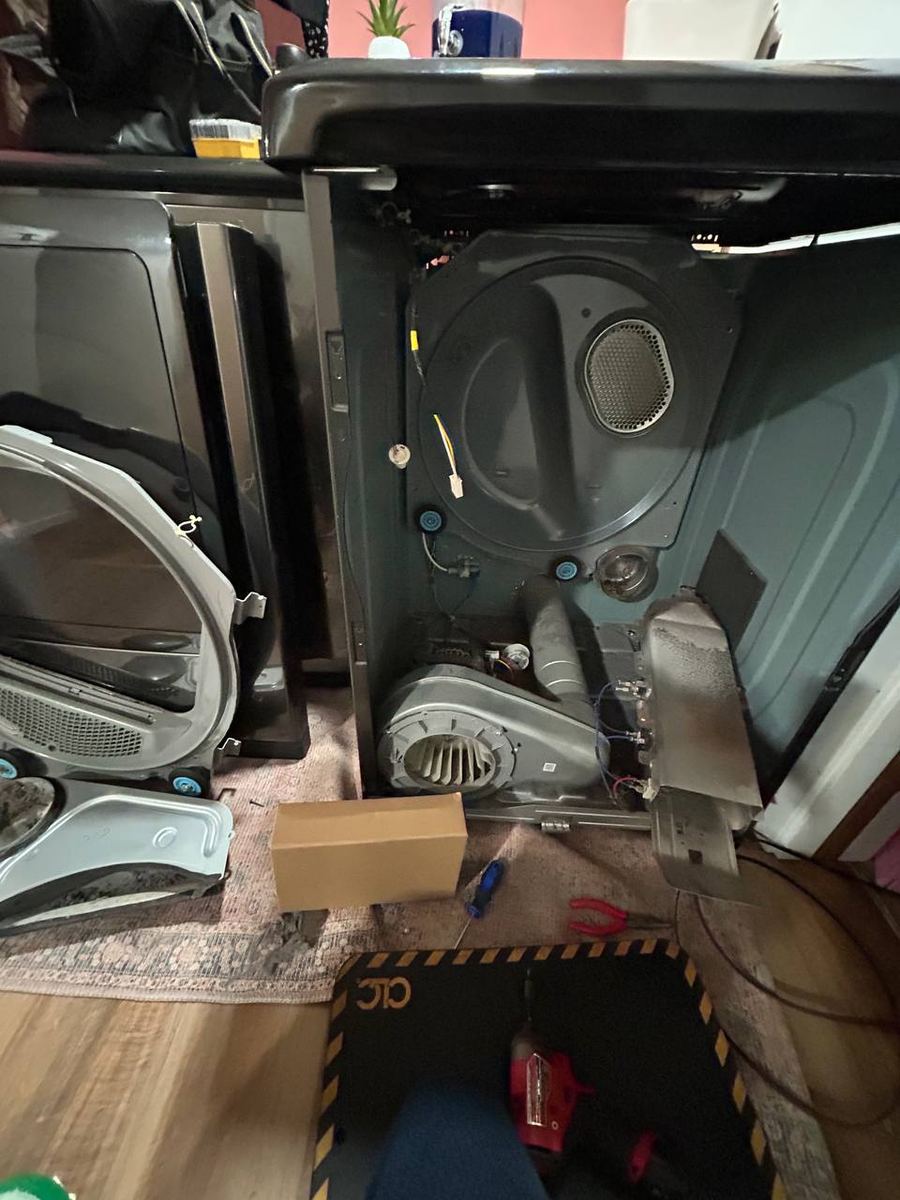
An electric dryer runs on a 240-volt circuit made of two 120-volt legs. The motor needs only one leg, but the heating element needs both, which is why a half-tripped breaker leaves the drum turning while the coil stays cold. Air is pulled across the element, through the drum, out through the lint screen and blower, and down the vent. A cycling thermostat on the exhaust switches heat on and off to hold temperature, and a high-limit thermostat and a one-time thermal fuse cut heat if things run too hot. A gas dryer uses ordinary household power plus a burner: a glowing igniter heats until a flame sensor reacts, then valve coils open the gas, and the same safety devices stand guard.
Most no-heat failures begin with airflow. When lint packs the duct or the outdoor hood sticks shut, hot air backs up, the high-limit thermostat trips more often, and eventually the thermal fuse opens for good. Replacing that fuse without clearing the vent only buys time. Electric elements crack after years of heating and cooling, sooner when they run hot behind a clogged vent, and a broken coil can touch the housing and trip the breaker. Gas igniters are brittle and weaken with use until they glow too faintly to trigger the flame sensor, while valve coils often fail first when warm, giving heat that starts and then quits. A burned cord or outlet sits outside the dryer, so the house side of it goes to an electrician.
Minnesota angle
Rosemount laundry rooms, gas lines and snowdrifts
Rosemount has grown fast, with about half its homes dating from 2000 or later, most of them detached houses or townhomes. Newer floor plans often put laundry upstairs or mid-house, which means long vent runs with elbows that collect lint. Most homes in Dakota County heat with natural gas, so gas dryers are common here, and their igniters and valve coils are frequent suspects. Winter is the other factor: with around 51 inches of snow in a typical year, outdoor hoods get buried or frosted over, and lint caught in ice pushes heat back into the dryer. After summer outages like those of July 2025, a dryer control may need a breaker reset before it behaves.
When to call
When to stop troubleshooting and call
Book a visit when the lint screen is clean, the hood pushes warm air, the breaker has been reset and the drum still runs cold, or when heat comes and goes, the breaker keeps tripping or you smell scorching. Online booking takes up to $15 off the repair price. $89 buys the diagnosis; it becomes part of the repair total you approve, or the entire charge if you stop there.
Book online · up to $15 offQuestions
Dryer not heating: questions
Why does my dryer tumble but never get warm?
The drum and the heat run on separate circuits inside the dryer, so the motor can be healthy while the heat source has failed. On an electric model the usual causes are an open thermal fuse, a broken element or one missing leg of the 240-volt supply. On a gas model, look to the igniter, flame sensor or valve coils. The technician checks each one with a meter rather than guessing.
Can I just replace the thermal fuse myself?
The fuse is a safety device, and it opens because something made the dryer overheat, usually a restricted vent or a stuck thermostat. Swapping it, or worse, bypassing it, leaves that cause in place and can turn a no-heat problem into a fire risk. Our technician tests the fuse, measures airflow at the hood and finds out why it blew before replacing anything.
My gas dryer's igniter glows, but no flame appears. What is wrong?
It depends on what the glow does. If it fades after a few seconds and no flame follows, the gas valve coils or the gas supply to the dryer are the usual suspects. If it keeps glowing without stopping, the flame sensor or a weak igniter is more likely. Leave the gas line and valve to us; the technician reads each part on a meter and watches the burner sequence.
How often should a dryer vent be checked in Rosemount?
At least once a year, and more often with long runs, roof vents, pets or heavy use. In winter, glance at the outdoor hood after each big snow, since drifts and frost close it quickly. If loads take longer than usual or the laundry room feels hot, check for airflow at the hood. Our technicians measure it on every no-heat call and tell you if the duct needs cleaning.
Is it worth repairing a dryer that does not heat?
Usually. No-heat repairs tend to involve fuses, thermostats, elements, igniters or valve coils, which are modest next to a new dryer and its installation. The technician names the failed part, explains what caused it and gives one written price. If the drum bearings, belt or motor are also worn on an older machine, you will hear that too before you decide.
Book the $89 diagnostic visit
Smell gas near the dryer? Walk everyone outdoors, then phone the gas utility or 911 from the yard. For a cold drum with no gas smell, call or book online, and every heat part gets tested on a meter.