Refrigerators · freezers · garage to basement
Refrigerator and freezer repair in Burnsville for kitchen, garage and basement units
Freezer gone soft, a warm fresh-food side, water under the crisper drawers, or a garage fridge that quit in January. Our technicians repair refrigerators and freezers in Burnsville and seven nearby cities, and a warm unit moves up the schedule.
- $89 diagnostic, counted inside the repair you approve
- One written price before any work begins
- Monday through Saturday, same-day when we can
- Warm units firstA warm refrigerator or freezer gets priority booking
- Infrared readingsShelf, coil and drawer temperatures measured, not guessed
- Garage and basementCold-garage stalls and July strain diagnosed on site
Refrigerators & freezers
How refrigerators live in Burnsville, Eagan and Lakeville homes
Plenty of south-metro households run more than one cold box: a French-door refrigerator in the kitchen, an older top-freezer in the garage for pop and leftovers, and a chest freezer in the basement of a Burnsville split-level holding venison and sweet corn. The Twin Cities average about 22 days a year at or below zero, and a standard refrigerator keeps its thermostat in the fresh-food section, so in a cold garage that section rarely asks for cooling, the compressor sits idle and the freezer above it drifts soft. July turns the problem around. On the dozen or so days that reach 90°F, a garage unit runs almost without pause, its condenser fan fighting hot, humid air while the cabinet sweats along the doors. Basement units stay steadier but gather dust on the coils.
Most refrigerator failures we find trace to airflow and defrost, not the compressor. Several times a day an auto-defrost unit warms its evaporator coil with a heater to melt the frost; when that heater, its defrost thermostat or the control that times it gives out, frost builds until air can no longer pass, and the milk shelf is the first place you notice it. A typical call goes like this: a side-by-side in an Apple Valley rambler keeps the freezer near zero at the top, yet the milk is lukewarm. The technician takes off the freezer’s back panel, finds the evaporator packed white, and meters the defrost heater, which reads open. The heater comes off the van, the ice is melted with a steamer, and the unit is pulling down to temperature before the technician leaves.
Symptoms
Refrigerator and freezer symptoms we see most
Fresh-food side warm, freezer cold
Cold air reaches the fresh-food side from the freezer, so this usually means a stalled evaporator fan, a coil choked by frost after a defrost failure, or a damper stuck shut. We read each compartment with an infrared thermometer, then meter the fan motor, defrost heater and defrost thermostat before naming the part.
Water under the crisper drawers
Meltwater from each defrost cycle should run down a drain tube to a pan under the cabinet. A frozen or plugged drain sends that water spilling into the fresh-food section, where it pools under the drawers. We clear the drain, then find out why it froze, which often points to a failing drain heater or a defrost fault upstream.
Clicking, then nothing
A click every few minutes with no hum usually means the compressor is trying to start while the relay or overload cuts it off. We test the relay, overload and compressor windings. If the readings point past the relay into the sealed system, we show you the numbers and what they mean for repairing or replacing.
Garage freezer soft in January
In a cold garage the thermostat in the fresh-food section stops calling for cooling, so the compressor rests and the freezer warms. We check what room temperatures the model was built for, test the thermostat and control, and tell you whether a warmer spot, a heater kit or a garage-rated unit is the realistic answer.
Cabinet sweating in summer
Beads of water along the door edges or the center divider in July mean warm, damp air is reaching cold metal. A torn or brittle door gasket, a sagging door or a failed mullion heater are the usual causes. We trace the gasket around each door, adjust the hinges and test the heater circuit.
Buzzing, rattling or a fan scrape
A fan blade ticking against ice in the freezer points to a defrost fault; a rattle near the floor is often a dusty condenser fan or a loose drain pan. We listen with the panels off, check the fan motor bearings, clean the condenser coil and confirm each motor runs at full speed.
Brands and models
Refrigerator brands and styles in south-metro kitchens
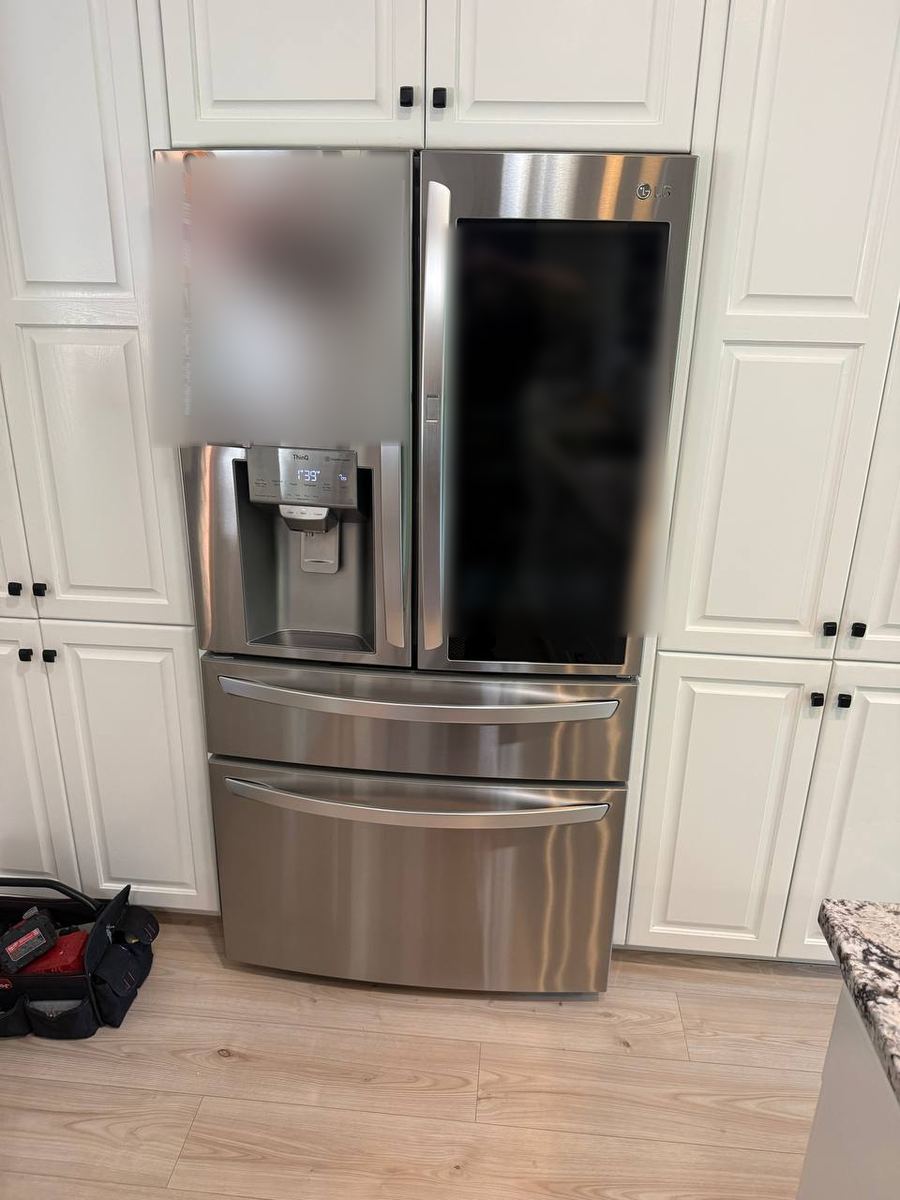
French-door models from LG, Whirlpool, GE, Frigidaire and KitchenAid fill most newer kitchens in Lakeville and Rosemount, often with a bottom freezer drawer. Side-by-sides from Maytag, Kenmore and Amana still run in many 1990s houses, and older ramblers tend to keep a plain top-freezer in the garage. Remodeled kitchens and some lake homes on Prior Lake have built-in columns or panel-ready units from Thermador, Miele, Bosch and Café. Basement uprights and chest freezers come mostly from Frigidaire, GE and Whirlpool. The model sticker is usually inside the fresh-food compartment along a side wall.
By city
What refrigerators face from Bloomington to Rosemount
Water reaches a refrigerator through its dispenser and ice maker, so city water still matters. Burnsville taps run about 23–25 grains of hardness and Apple Valley about 24, enough to crust inlet screens and clog filters early. Savage, buying much of its supply from Burnsville, measures about 19–21 grains; Prior Lake about 19.3; Lakeville about 18, where the city suggests a softener set near 14–16. Eagan’s well water is hard as well. Bloomington is the exception, lime-softened by the city to about 5 grains, so scale is seldom the cause there. In Rosemount, on city well water, check the softener before blaming the valve. Cold garages, meanwhile, are universal.
Repair or replace
Fix the refrigerator or replace it?
We set out what failed, the one written price and the condition of the rest of the cabinet, and the decision stays with you. A defrost heater, fan motor, damper, start relay, inlet valve or door gasket is usually worth replacing on a refrigerator that otherwise holds temperature. Built-in and panel-ready units almost always merit repair, since a replacement has to fit the same opening and match the cabinets. When the meter and our temperature readings lead to the compressor or the refrigerant circuit, we walk you through those numbers, what they suggest about keeping or retiring the unit, and what else on the cabinet looks tired. If the maker’s warranty still covers the unit, you hear that from us first.
Questions
Refrigerator repair questions
Can an ordinary refrigerator work in a Lakeville garage?
Some can, within limits. Most units list the room temperatures they were designed for, and a garage that sits below freezing for weeks falls outside many of them. The fresh-food thermostat stops calling for cold and the freezer warms, then summer heat pushes the condenser hard. Read us the model number and we will tell you how it was rated and what tends to help.
Should I unplug the refrigerator before the technician comes?
Leave it running unless it is leaking toward an outlet, smells hot or keeps tripping a breaker. A running unit lets the technician watch the fault, take temperatures and hear the fans. Move food you care about into a cooler or a working freezer, and have the model sticker or any error code handy when you call or fill out the form.
How soon can someone see a warm freezer in Apple Valley?
A warm refrigerator or freezer gets priority, and same-day visits are often possible when you reach us early in the day, Monday through Saturday. Whether you call or fill in the form, our office confirms a two-hour arrival window by phone, and a form request can trim up to $15 from the repair price. Meanwhile, keep the doors shut.
What happens if the compressor is the problem?
Compressor trouble is less common than people fear, and we confirm it with measurements before using the word. If the start components test fine and the readings still lead into the sealed system, we tell you what we measured, what it means for repair versus replacement on that particular cabinet, and whether the cabinet’s age and its other parts justify the work.
Why does my bottom freezer drawer keep icing up?
Frost on the food and the drawer walls usually means moist air is getting in. Overfilled baskets that hold the drawer open a crack, worn slides, a gasket that dried out over a long heating season, or a humid summer kitchen can all be behind it. If the frost sits on the back wall instead, a defrost part is the likelier cause.
Do you repair upright and chest freezers?
Yes. Standalone freezers in basements and garages are part of our refrigerator work, and outages like the one on July 28, 2025 bring plenty of them to us with spoiled food and a control that never recovered. We check the thermostat or control board, defrost parts on upright models, door seals and the condenser, and give one written price before any work.
Refrigerator and Freezer Repair by city
Other services
Troubleshooting guides
Book the $89 diagnostic visit
On a refrigerator or freezer call, the $89 visit becomes part of the repair total once you say yes, and if you decide against the repair, $89 is the entire bill.