Troubleshooting · ice makers · hard water
Ice maker not making ice in Apple Valley: water, cold or module
An empty bin, a mold full of cubes that never drop, or ice that arrives small and hollow. With Apple Valley water near 24 grains of hardness, mineral scale is often part of the story behind a stalled ice maker.
- $89 diagnostic, counted inside the repair you approve
- One written price before any work begins
- Monday through Saturday, same-day when we can
- Freezer targetNear 0°F keeps the ice maker cycling
- Local hardnessAbout 24 grains per gallon in Apple Valley
- What we serviceIce makers built into refrigerators
Safe checks first
Safe checks for an empty ice bin
- Confirm the ice maker's switch is on and that the wire arm or bin sensor is not raised or blocked.
- Break apart any fused ice in the bin and empty it; one frozen clump can hold the shutoff arm up for days.
- Make sure the refrigerator's supply valve is fully open, especially after plumbing, remodeling or softener work downstairs.
- Fill a glass at the water dispenser and count the seconds; a lazy trickle hints at a clogged filter or weak supply.
- Swap in a new refrigerator water filter if the old one is past its interval, then run several glasses to purge air.
- Check your softener's salt and hardness setting; an empty brine tank in Apple Valley lets scale reach the inlet valve fast.
Likely causes
What stops an ice maker, and how we prove it
| Likely cause | What points to it | What the technician tests |
|---|---|---|
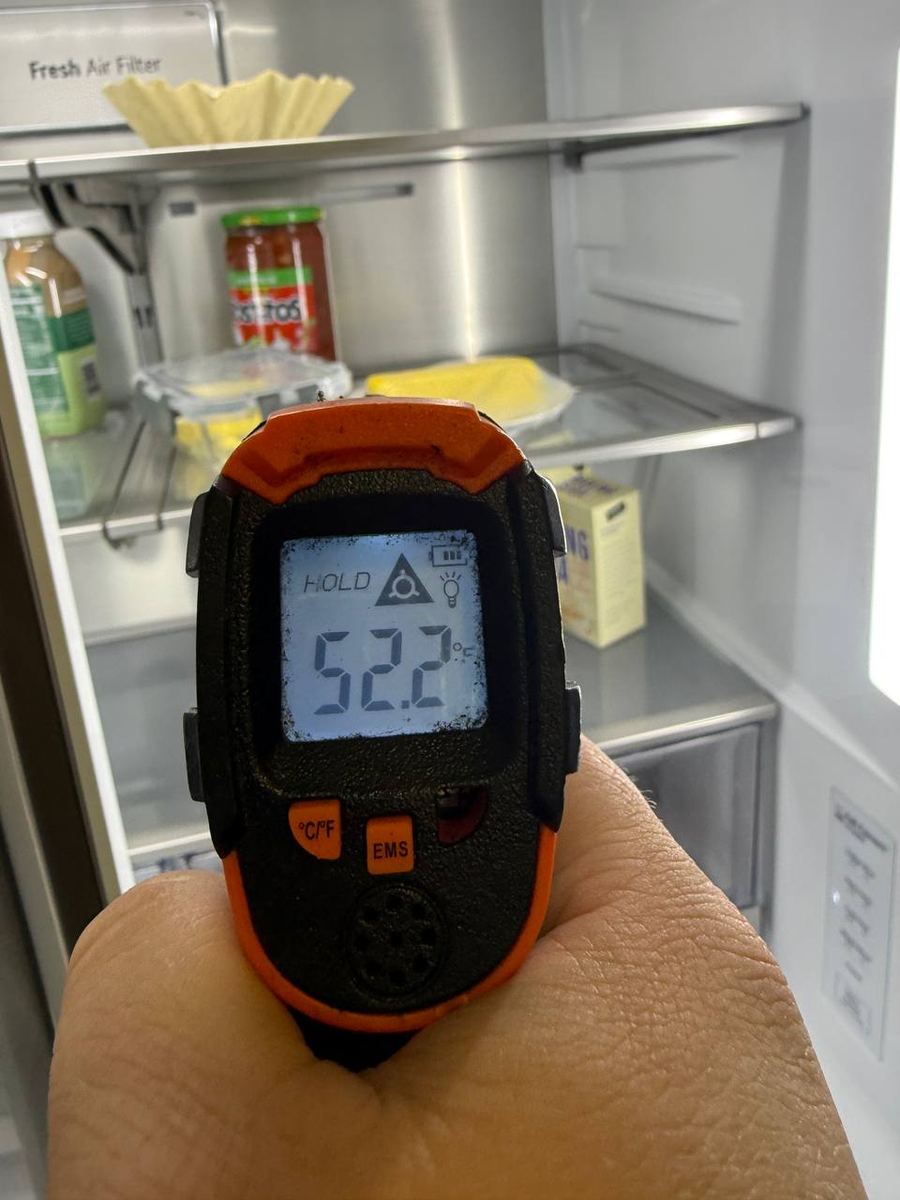
| Freezer running too warm | Soft ice cream, frost buildup, few or no cubes | Infrared readings of the mold and freezer, then fan and defrost tests |
| No water reaching the mold | Mold stays dry; dispenser slow or also dead | Supply pressure, inlet valve coil resistance, voltage at the valve during fill |
| Frozen fill tube | Ice plug at the fill cup, valve buzzes, nothing arrives | Fill tube and cup inspection, valve seepage between fills |
| Scaled valve screen or tired filter | Small, hollow or thin cubes; output dropping over months | Inlet screen condition, measured fill volume, flow through the filter |
| Ice maker module or bin sensor | Full mold that never ejects, or the arm misreading the bin | Module test cycle, harvest heater continuity, motor and sensor checks |
How it works
One ice-making cycle, step by step
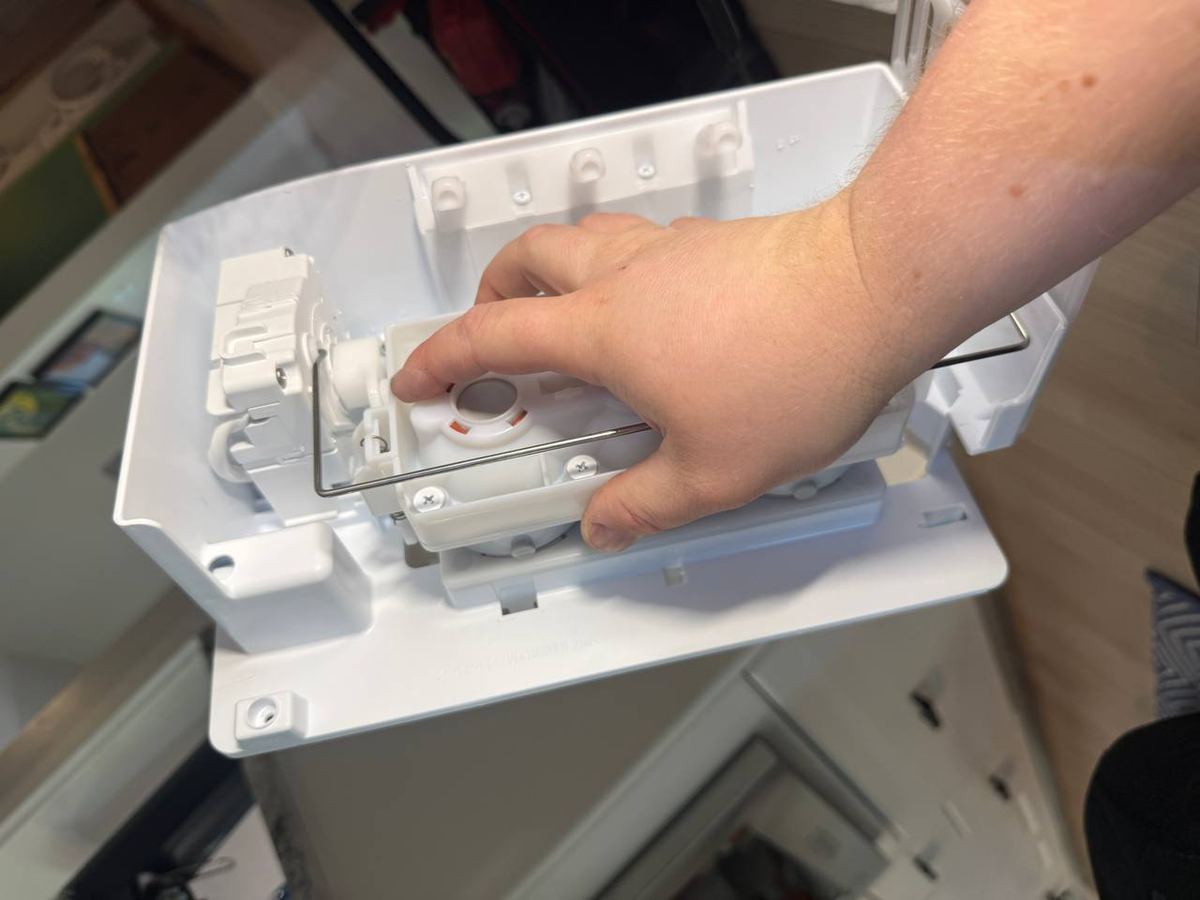
An ice maker repeats a short loop all day long. When the mold is empty and the bin has room, the control opens the water inlet valve for a few seconds, and water runs up a small tube into the fill cup and the mold. Freezer air then turns that water to ice. A thermostat or thermistor on the mold waits until the cubes are well below freezing; then, depending on the design, a small heater warms the mold just enough to loosen the cubes and an ejector sweeps them out, or a plastic tray twists and tips them into the bin. A wire arm or an optical sensor checks the bin level before the next fill. Door-mounted ice makers in French-door models borrow their cold through a duct from the freezer.
Failures fall into three groups. On the water side, scale and sediment narrow the inlet valve screen, so each fill delivers less water and cubes come out small or hollow; a valve seat roughened by minerals may also seep between fills, and that trickle freezes into a plug inside the fill tube that blocks the next fill. Low household pressure, a kinked line or an old filter make every one of those worse. On the cold side, anything that warms the freezer, from a frosted evaporator to a stalled fan, keeps the mold from reaching harvest temperature. The third group is the module itself: worn gear motors, open heaters and dirty or misaligned sensors. A meter tells the three groups apart within a few tests.
Minnesota angle
Apple Valley hardness, softeners and storm outages
Apple Valley's water measures about 24 grains per gallon, and home softeners are common across the city for good reason. When a softener runs out of salt, the ice maker is often where owners notice first, because its valve and fill tube see small, frequent doses of untreated water. Outages hit ice makers hard as well. The September 2021 tornado that touched down near Cedar Avenue and 145th Street knocked out power across the area, and a long loss of power can leave partly melted cubes refrozen into one block that jams the arm or the dispenser auger. Humid summers load the freezer with frost when doors open often, and a frosted coil means a warmer mold and slower ice.
When to call
When an empty bin calls for a technician
Book a technician when the mold stays empty with the supply valve open and a fresh filter in place, when the dispenser pours water but no ice appears, or when the freezer itself reads warm. Keep the model number handy for the call, or enter it on the form. You pay $89 for the visit; go ahead with the repair and that sum lives inside the written price, decline and the visit ends at $89.
Book online · up to $15 offQuestions
Ice maker not making ice: questions
Why are my ice cubes small, hollow or thin?
Undersized or hollow cubes almost always mean the mold is getting a short fill. The usual reasons are a filter past its life, scale on the inlet valve screen, a partly closed supply valve or low household pressure. A slow water dispenser is a good hint. The technician measures how much water one fill delivers and inspects the valve screen before naming a part.
Water comes out of the door, but the ice maker stays empty. What does that tell you?
It narrows the search. In many refrigerators one inlet valve carries separate coils for the dispenser and the ice maker, so water at the door shows the house supply and filter are doing their job. The fault then lies with the ice maker's valve coil, a frozen fill tube, the ice maker module, or a freezer too warm for the mold to harvest. Each gets tested with a meter.
Does Apple Valley's hard water damage refrigerator ice makers?
Over time it can. At about 24 grains per gallon, minerals collect on the inlet valve screen, crust the fill tube and turn cubes cloudy. The refrigerator's carbon cartridge improves flavor and traps grit without softening anything, so a home softener with salt in it is what keeps scale down. Softeners fall outside our work, but the technician will tell you when the ice maker shows the signs.
How soon does ice come back after a repair?
Expect the first cubes in roughly a day, once the freezer is back to temperature and the mold has chilled, and longer before the bin fills. Many owner's manuals suggest tossing the first few batches after a new filter or valve, since they can carry fine carbon or trapped air. If nothing appears after a full day with the freezer reading cold, call us so the technician can come back.
Do you fix standalone ice machines or the ice maker in a wine cooler?
No. We work on ice makers built into refrigerators, whether that is a top-freezer kit, a bottom-freezer unit, a door-mounted French-door ice maker or a side-by-side model. Standalone and under-counter ice machines and wine coolers are outside what we service. If you are unsure which kind you own, read us the model number on the call and we will sort it out before booking.
Repair service
Book the $89 diagnostic visit
Our technician checks the supply, the valve, the fill and the freezer temperature before naming the failed part, and you see one written price for the ice maker repair before any work starts.