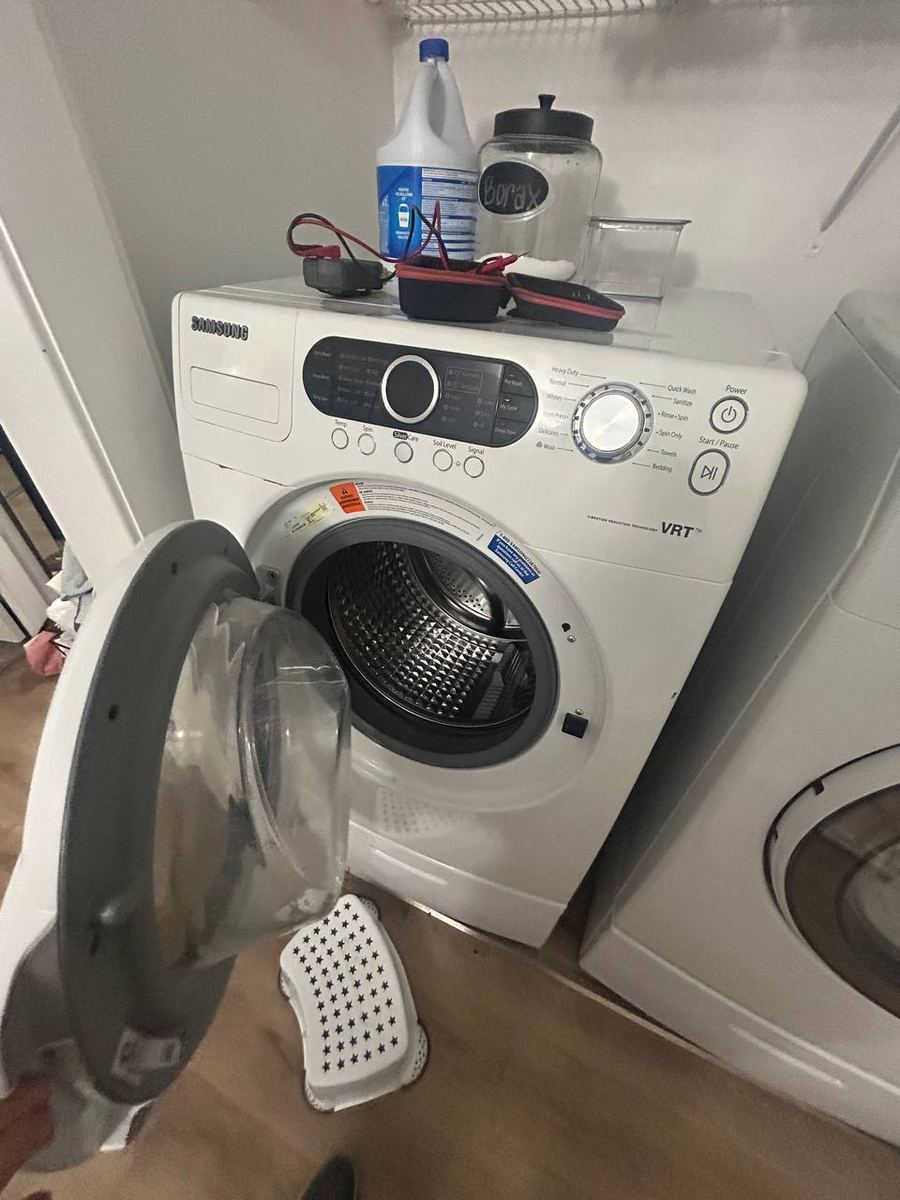
Troubleshooting · washers · spin
Washer not spinning in Lakeville: balance, locks and drives
Clothes come out dripping, the drum shudders and quits, or the motor hums while the basket sits still. In Lakeville's newer homes the cause ranges from a lopsided load to a worn lock or drive part.
- $89 diagnostic, counted inside the repair you approve
- One written price before any work begins
- Monday through Saturday, same-day when we can
- Try firstA small, balanced drain-and-spin cycle
- Newer machinesAsk about the maker's coverage first
- Lakeville waterAbout 18 grains; softeners set 14 to 16
Safe checks first
Safe checks before you call about spin
- Spread the load evenly; a lone bath mat, comforter or pair of jeans can trip the imbalance check over and over.
- Run drain and spin by itself; if water is still in the drum afterward, the real problem is draining.
- Check the spin setting; delicate, hand wash and no-spin options keep the basket slow on purpose.
- Make sure the lid or door shuts completely and that nothing, such as a sock or towel corner, sits in the latch.
- Press down on each corner of the washer; a machine that rocks needs its leveling sorted before it will spin fully.
- Measure HE detergent to the line; foam can hold a front-loader at low speed for the rest of the cycle.
Likely causes
What keeps the basket from reaching speed
| Likely cause | What points to it | What the technician tests |
|---|---|---|
| Unbalanced load or worn suspension | Spin starts, slows, restarts; washer bangs or walks | Suspension rods, springs or shock absorbers, tub movement, leveling |
| Lid switch or door lock | Fills and washes but never spins; a lock code | Switch and lock continuity, the lock signal reaching the control |
| Drive belt or motor coupler | Motor runs or hums, basket still; burnt-rubber smell | Belt wear and tension; coupler on older direct-drive top-loaders |
| Motor, rotor sensor or motor control | Motor error code on a direct-drive front-loader | Winding resistance, rotor position sensor signal, motor control outputs |
| Shifter, clutch or transmission | Agitates but will not spin, or the reverse | Shifter test in service mode, clutch wear, transmission engagement |
How it works
What happens before a washer reaches full spin
A spin does not start on command. After the last drain, the control first confirms that the lid or door is locked and that the pressure sensor reads an empty tub. Then it ramps the motor up in stages, watching for imbalance through motor current or a vibration sensor. If the load is lopsided, it stops, tumbles or adds a little water to shift the clothes, and tries again; after several failed attempts many machines finish with a slow spin and wet laundry. The drive differs by design. Older top-loaders use a belt and clutch or a direct-drive motor with a coupler, newer top-loaders shift between agitate and spin with a small actuator, and front-loaders turn the drum by belt or by a motor mounted on the back of the tub.
Worn suspension is a frequent root cause. As springs, rods or shock absorbers weaken, the tub swings farther, the imbalance logic trips sooner, and the washer refuses to reach speed even with ordinary loads. Lid switches and door locks wear from years of slamming and from detergent residue. Belts stretch and glaze when the drum is routinely overloaded, and the coupler on older direct-drive top-loaders is built to break under strain so the motor survives. On direct-drive front-loaders, a failing rotor position sensor or a fault on the motor control board shows up as a motor error. Suds play a part as well, since foam cushions the drum and makes the control hold the speed down.
Minnesota angle
Lakeville homes, softener settings and summer towels
Lakeville has the youngest housing in the area, with about two-thirds of homes built since 1990, and many put the laundry upstairs near the bedrooms, often with a sensor-heavy front-loader. Upstairs framing flexes more than a basement slab, so leveling and suspension matter more. Lakeville's water runs about 18 grains per gallon, and the city suggests setting home softeners around 14 to 16 grains, because water softened too far turns corrosive and makes an ordinary detergent dose foam. Foam means slow spins. Summer brings heavy loads of wet towels from Lake Marion and the Antlers Park beach, and one waterlogged beach towel balled up in the drum can trip the imbalance check.
When to call
When a spin problem needs a technician
Book a visit when a small, balanced load on drain and spin still will not reach speed, when the motor hums under a motionless basket, or when you smell hot rubber or hear grinding. If the dryer has been slow too, tick the second-appliance box and its diagnostic costs $10 less. Approve the washer repair and the $89 diagnostic already sits within that price; decline it and you pay $89 alone.
Book online · up to $15 offQuestions
Washer not spinning: questions
Why does my washer spin some loads but not others?
That pattern points to the imbalance logic. Small mixed loads redistribute easily, while a single heavy item or a twisted rope of sheets keeps one side of the drum heavier, so the control keeps aborting the ramp-up. If even small, even loads fail, the suspension may be worn or the motor drive may be losing speed, and the technician checks both in the washer's service mode.
Is it safe to keep running a washer that will not spin?
Running it again and again usually does more harm than good. Each failed spin attempt works the motor, belt and lock, and heavy wet loads strain the suspension further. Stop if you smell burning rubber or hot plastic, or if the washer bangs hard. Wring out what you need, leave the drum empty and book a visit.
My Lakeville washer is only a few years old. Could the maker still cover it?
Quite possibly, since so many Lakeville homes and machines are recent. Find the model and serial number on the label, usually inside the lid or around the door opening, and give them to us on the call or in the form. If the maker's warranty still applies, we say so before quoting anything, so you can use it.
What does an error code mean when my washer stops spinning?
Codes fall into broad families: imbalance, lid or door lock, motor or drive, and draining. They steer the technician toward a system, not a specific part. Read the code to us when you book, and the technician uses the washer's service mode and a meter to confirm which component actually failed before naming it and writing a price.
Can over-softened water cause spin problems?
Indirectly, yes. Very soft water makes a normal detergent dose foam heavily, and foam slows the drum and triggers suds routines that hold spin speed down. For its 18-grain water, the city of Lakeville recommends keeping home softeners around 14 to 16 grains. We leave softener service to others, but if your settings look aggressive, the technician will mention it.
Book the $89 diagnostic visit
Before naming a spin part, the technician runs the washer in service mode and reads the motor, lock and sensors on a meter. You see one written price and make the call.