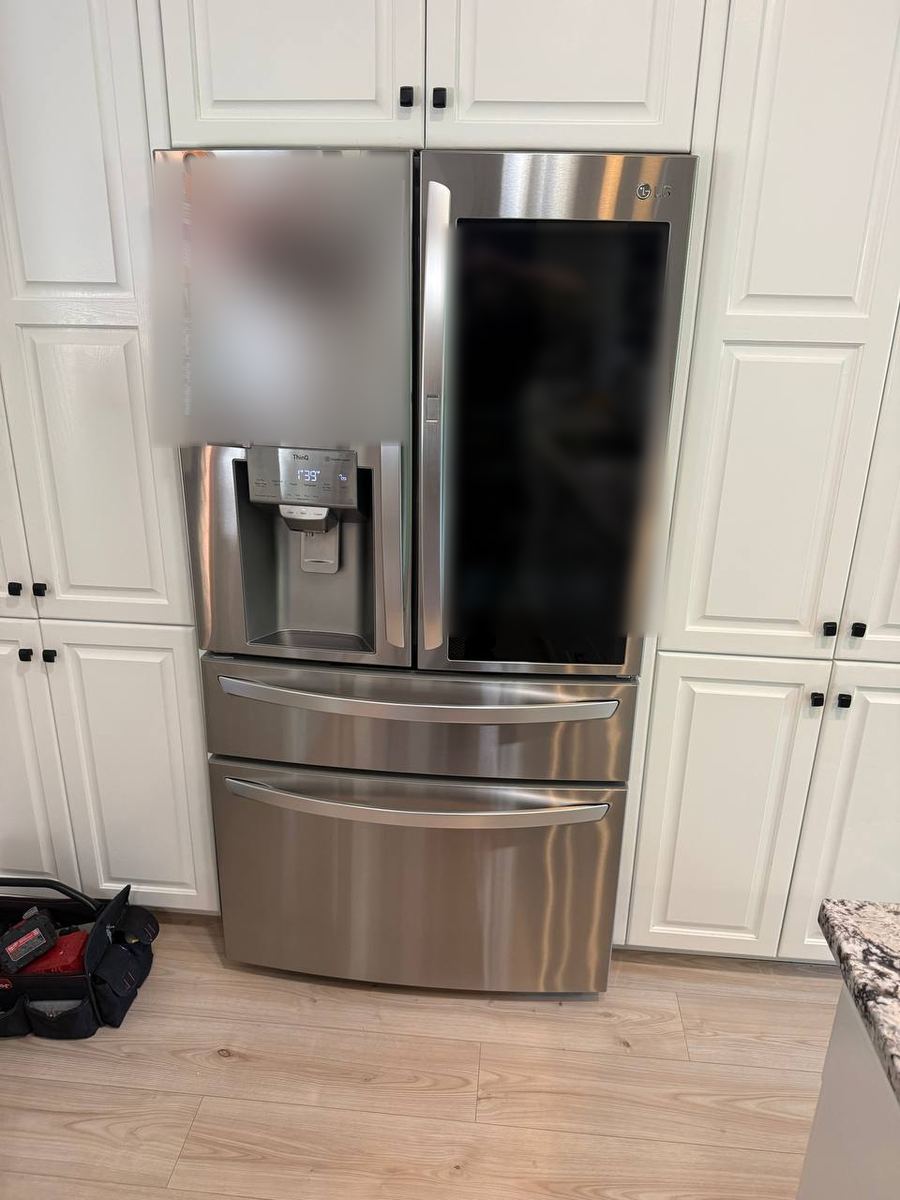
Refrigerators · kitchen, garage, basement
Apple Valley refrigerator repair for warm shelves and soft freezers
Milk turning by morning, a freezer drawer gone soft, a garage fridge that gave up in the July heat. We send technicians across Apple Valley with an infrared thermometer and a meter, and warm refrigerators jump the line.
- $89 diagnostic, counted inside the repair you approve
- One written price before any work begins
- Monday through Saturday, same-day when we can
- PriorityAnything warm that should be cold goes first
- Cooling toolsInfrared thermometer and meter on each call
- ModelsSide-by-side, French-door, built-in, chest, upright
Refrigerators & freezers · Apple Valley
Refrigerator and freezer repair in Apple Valley
Freedom Days is a hard week for Apple Valley refrigerators. Around the Fourth of July the kitchen door swings open all afternoon, the garage fridge fills with drinks, and the basement freezer gives up its burgers and brats. The holiday lands in the season of the area’s twelve or thirteen days a year at or above 90°F, with humid air that makes cabinets sweat. A rambler’s attached garage can be the toughest spot of all: hot and damp in July, then about 22 days a year that dip to zero or lower, when a standard fridge out there barely runs and can let the freezer soften or freeze the lettuce. In the late-1960s and 1970s houses near Farquar Lake and along the streets off 147th Street, the same few parts carry that load year after year.
Most warm-refrigerator calls trace back to airflow or defrost, not to the compressor. A condenser coil felted with dust and dog hair cannot shed heat in a hot kitchen, so the compressor runs without a break and the upper compartment creeps toward room temperature. An evaporator fan that squeals or stalls leaves the cold air parked behind the freezer panel. On auto-defrost models, a burned-out defrost heater or a failed defrost thermostat lets frost pile up until it seals the coil, and the first clue is often a warm refrigerator above a freezer that still feels fine. Gaskets cracked by a winter of indoor heat let humid summer air in, feeding more frost. If the readings lead to the sealed system, we describe what the instruments showed and how that shifts the repair-or-replace math.
Symptoms
Refrigerator warning signs in Apple Valley kitchens
Top section warm, freezer fine
Usually an airflow fault: an evaporator iced over because the defrost heater died, or a fan that stopped turning. The technician compares both sections with an infrared thermometer, then meters the fan motor and each defrost part.
Freezer going soft in a cold garage
The garage is chillier than the fresh-food section ever gets, so the control seldom asks for cooling. We look up whether the model is designed for garage temperatures and test the thermistor and controls before suspecting anything bigger.
Puddle beneath the crisper bins
Meltwater from the defrost cycle should run to a pan underneath, but a drain clogged by ice or crumbs spills it inside instead. We open the line, check any drain heater the model uses and work out why it froze.
Clicking, then silence, over and over
Often a start relay or overload that keeps trying to start the compressor and giving up. Relay, start parts and the voltage reaching the cord all get measured before the compressor itself comes up.
Cabinet sweating along the doors
Humid weather meeting a door gasket that has torn or gone flat, or a mullion heater that stopped working on a French-door model. We trace the full length of every seal and check that heater circuit on the meter.
Dispenser slow or barely dripping
Scale from hard water in the inlet valve screen, a supply line pinched behind the cabinet, or a filter overdue for a swap. We measure flow at the valve and the resistance of its coil.
The visit
How a refrigerator visit runs
- 01
Temperatures before panels
The technician reads both compartments and the evaporator area with an infrared thermometer, then listens for the compressor, the condenser fan and the evaporator fan. Those numbers sort the trouble into airflow, defrost, controls or something deeper while every panel is still on.
- 02
Meter on each suspect
Defrost heater, defrost thermostat, fan motors, thermistors and the start relay each get a meter test. A garage unit also gets its receptacle and circuit breaker checked, because a weak circuit can pass for a bad part, and faults inside the walls go to an electrician.
- 03
Cause, then a price
You learn which part gave out and what wore it down, followed by a single written price for the whole job. A refrigerator still under the maker’s warranty gets that news up front. Nothing changes hands until you say yes.
- 04
Repair and pull-down
Common parts travel in the van, so most fixes wrap up on the first visit. The technician cleans the condenser coil, confirms both sections are cooling and puts the warranty in writing on the invoice. An ordered part means a second trip, not billed as one.
Apple Valley
Garage refrigerators through an Apple Valley year
A refrigerator in an Apple Valley garage sees both ends of the local climate. In cold weather its thermostat sits in a fresh-food section that already feels chilly, so it asks for little cooling, and a standard model can let the freezer drift soft on a raw November day, then freeze the produce once the garage drops below zero. In July the same unit fights hot, humid air, the condenser runs hot and the door seals collect moisture. Units built for garage duty handle that swing better, and the model sticker tells us which kind you own. A basement chest or upright freezer has an easier life, though summer dampness can still frost a gasket. If one quits during a cold snap or a heat wave, say so on the call; a warm freezer moves up our list.
147th Street · a packed fridge before the Fourth
Two days before Freedom Days, the French-door model in a rambler off 147th Street had shelves near room temperature while the freezer drawer stayed hard. The infrared thermometer found the evaporator wearing a thick coat of frost, and the defrost heater read open on the meter. That heater was on the van. The technician installed it, melted the ice and watched the fresh-food side pull down before leaving, and the food came back in from the coolers that evening.
Repair or replace
Repair or replace an Apple Valley refrigerator
The failed part usually settles the question. Fans, defrost heaters, defrost thermostats, start relays, door gaskets and control boards are ordinary repairs, even on a refrigerator that has outlasted a kitchen remodel. When the meter and the thermometer point toward the compressor or a leak in the refrigerant circuit, the picture changes; we walk you through the readings and what that kind of work involves, so you can set it beside a new unit. Fit deserves a thought in the older ramblers too, since a built-in or a French-door model sized into an original cabinet opening may not have an easy replacement. Whatever you decide, the price arrives in writing as a single figure, and nobody leans on you toward one answer.
Questions
Refrigerator questions from Apple Valley
My Apple Valley refrigerator is warm. How soon can someone come?
Cooling failures jump ahead of other calls. Phone early, Monday through Saturday, and we can often get a technician there the same day. Meanwhile, open the doors as little as possible, put the milk, meat and medicine in a cooler, and keep the refrigerator plugged in unless it smells hot or the breaker keeps tripping.
Is my garage refrigerator in Apple Valley built for the cold?
Some are and many are not. A standard refrigerator relies on room temperature to cycle properly, so a cold garage can confuse it in winter, and July heat works its condenser hard. Give us the model number when you phone, or add it to the booking form, and we will know before arriving whether it is meant for garage life.
Do you fix basement freezers in Apple Valley homes?
Yes. Chest and upright freezers downstairs get the same visit as a kitchen refrigerator: temperature readings, a meter on the controls, fan, relay and any defrost parts, and a written price before a part is swapped. Clear a path to the unit beforehand, since basement freezers tend to end up boxed in by storage.
How does the $89 work on a refrigerator call?
The $89 buys the temperature readings, the meter tests and a part named in plain language. Say yes to the repair and that $89 is counted within the written total rather than stacked on top. Say no, and the $89 settles the visit; you keep the diagnosis to use as you like.
How do you decide if an Apple Valley refrigerator is worth fixing?
We start with what the meter found. Most failed parts are worth swapping when the cabinet, liner and doors are in good shape. If the evidence leads to the sealed system, we explain what that means, how involved the work would be and how it compares with buying new, without choosing for you. Coverage under the maker’s warranty, if any remains, is the first thing we mention.
More repairs in Apple Valley
Refrigerator and Freezer Repair nearby
Troubleshooting
Book the $89 diagnostic visit
On an Apple Valley refrigerator or freezer, $89 pays for the diagnosis, and approving the fix tucks that amount into the written price rather than adding a line.