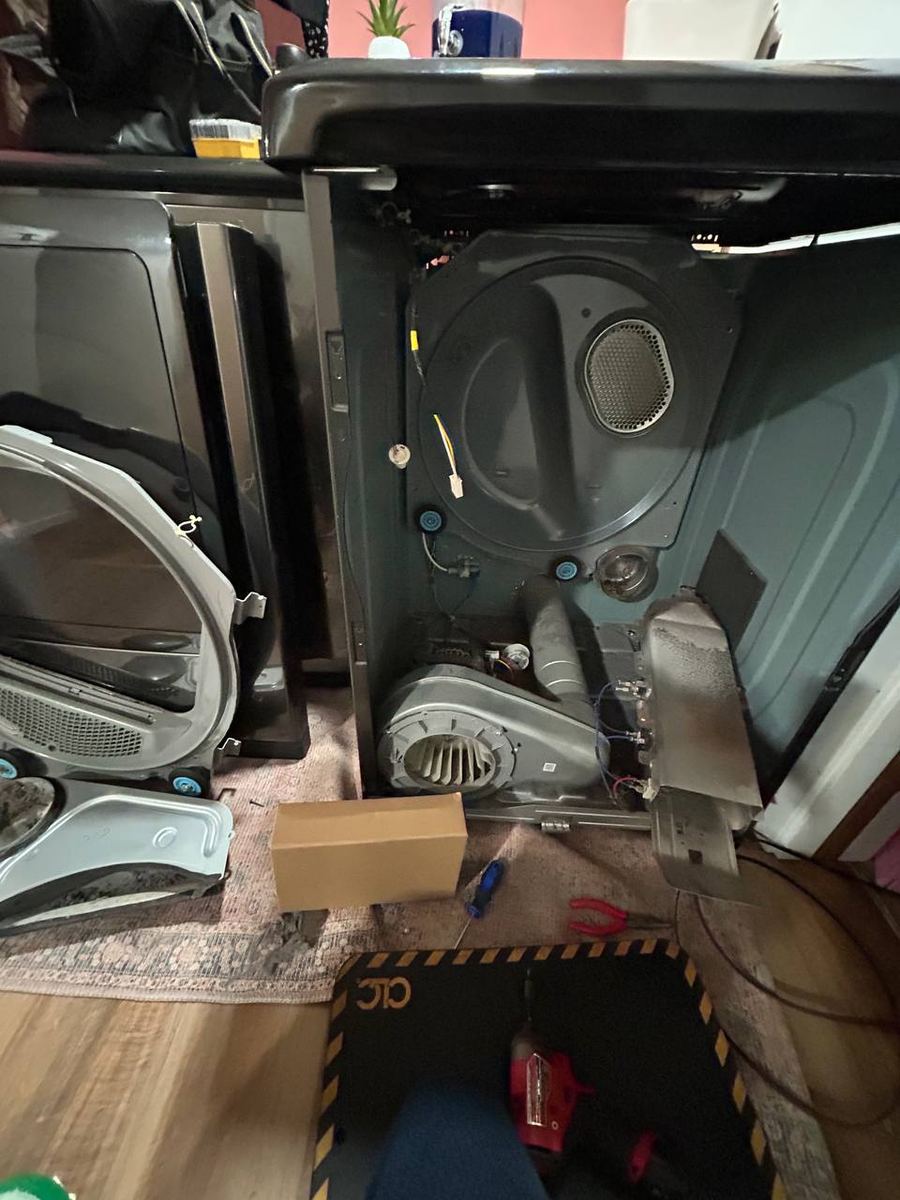
Dryers · snowed-in hoods and gas burners
Dryer repair in Rosemount when towels need a second cycle
Drum turning but the air stays cool, a hot-metal smell, loads that need a second round? Rosemount dryer service covers gas and electric machines, the igniter or element inside, and the outside hood that snow and lint love to plug.
- $89 diagnostic, counted inside the repair you approve
- One written price before any work begins
- Monday through Saturday, same-day when we can
- Fuel typesNatural gas or electric, standalone or stacked
- Vent checkOutside hood looked at on heat complaints
- Diagnostic$89, absorbed once you approve a fix
Dryers · Rosemount
Dryer repair in Rosemount, from gas burners to frozen hoods
Ask who heats with natural gas in Dakota County and the answer is most households, so once the gas line reaches the basement it usually runs to the dryer too. That is why a gas burner, not an electric element, warms the clothes in so many Rosemount laundry rooms, from houses near Highway 3 to newer streets out toward US 52. Electric dryers turn up where a townhome or a house was wired for one instead. Whichever kind you own, it pushes warm, wet air through a duct, and in most local homes that duct exits through the rim joist and ends at a hood on the siding. Here the hood takes a beating: roughly 51 inches of snow in an average winter, and stretches of subzero cold that turn the exhaust’s moisture to frost on contact.
A choked vent is at the root of plenty of dryer calls because it quietly wrecks other parts. When the hood is packed, heat pools inside the cabinet, cycles drag on, and the high-limit opens or the one-shot thermal fuse blows to protect the drum. On gas machines the igniter is the next usual casualty; it weakens a little with every heating cycle until it glows without lighting the burner, or stops glowing entirely. The coils that open the gas valve age along with it. Electric machines lose elements and their cycling thermostats. Dryers bought with homes in the 2000s have also reached the stage when rollers squeal, belts fray through and the idler pulley starts to wobble. Each failure leaves a reading or a visible clue, which the technician collects before naming a part.
Symptoms
Dryer symptoms Rosemount households report
Tumbling fine, blowing cold air
Gas dryers: the igniter, the radiant sensor beside it, or the coils on the gas valve. Electric dryers: an element or an open thermal fuse. Each gets metered in turn, and the vent gets checked for the root cause.
Jeans still damp when the buzzer sounds
Usually trapped air: lint deep in the duct, foil hose squashed flat behind the machine, or a hood caked with lint and ice. We feel the exhaust at the hood and inspect each reachable duct section.
Shuts off halfway through the load
Usually an overheated motor or a cycling thermostat tripping because hot air is trapped. We test the thermostats and motor, then find whatever is holding the heat in.
Thump, squeal or scrape in the drum
Flat-spotted rollers, a frayed belt, an idler pulley gone dry, drum glides worn thin. With the cabinet open, the technician spins each one by hand and listens for the culprit.
A scorched smell on warm loads
Lint packed near the burner tube or the element housing, or a stuck thermostat letting the heat climb. Stop running it until it’s been looked at, and keep emptying the lint screen every load.
Rotten-egg odor near a gas dryer
Walk everyone out and make the call to 911 or the gas utility from the driveway. Leave the dryer, the lights and every switch untouched. After the utility clears the home, the technician can check the dryer’s valve and burner.
The visit
What happens when we come to repair a Rosemount dryer
- 01
Hood before cabinet
The technician walks outside before touching the dryer. A flap frozen shut or a screen packed with lint explains many no-heat and slow-dry complaints, and ruling it out takes only a moment.
- 02
Readings on heat parts
Gas units get resistance readings across igniter, radiant sensor and both valve coils; electric units get the same treatment for the element and its thermostats. Every no-heat call includes a test of the thermal fuse and the high-limit.
- 03
Price before parts
You learn which part failed and why, then see one price written down. A yes means the $89 is already built into that total; decline and the trip ends at $89, with nothing else added.
- 04
Heat test, then cleanup
Igniters, fuses, thermostats, belts and rollers usually travel on the van. The technician runs a timed heat cycle, checks that exhaust is pushing out at the hood, vacuums up the lint that fell from the cabinet and records the warranty on the invoice.
Rosemount
Snow, lint and gas dryers in Rosemount houses
Winter dryer calls in Rosemount follow a script. After a big storm, like the January 2–5, 2023 snowfall of about 15 inches, hoods on exposed walls disappear under drifts, and a dryer that behaved all fall suddenly needs two cycles and blows its thermal fuse. Frost forms whenever warm, wet exhaust meets a frozen flap, and a little lint glues that frost in place. Houses facing open fields drift over fastest. Summer brings a gentler problem: muggy air leaves loads damp longer, so the dryer logs more hours. Gas dryers are common because most homes already burn gas for heat; electric ones show up in some townhomes and newer builds. Whatever you own, shovel the hood clear after every storm and pull lint off the screen ahead of each load.
Near UMore Park · gas dryer after a February storm
After a heavy February snow, a gas dryer in a home out near UMore Park began quitting midway through every load with a hot smell. The technician headed outside first and found the vent hood buried, its flap locked in ice and lint. Inside, the thermal fuse read open. With the owner’s okay on the written price, the hood was cleared, the crushed transition hose replaced and a fuse fitted from the van. The next towel load dried in one normal cycle with the cabinet staying cool.
Repair or replace
Fixing versus replacing a Rosemount dryer
Dryers are simple machines, and that simplicity usually favors repair. An igniter, fuse, element, belt or roller kit returns a gas or electric dryer to service at a fraction of a new one’s cost, and drums and cabinets seldom wear out. Replacement earns a look when rust has eaten through the drum, the motor has died on an older unit, or the control board quits on a machine whose bearings are also worn. Many Rosemount dryers arrived with houses built after 2000 and still have useful years ahead after a heat-part repair. And if the real trouble is a long, crushed or neglected vent, a new dryer would struggle the same way, and you hear that from us before you shop.
Questions
Dryer questions from Rosemount
Gas dryer in Rosemount: can you work on it?
Yes, and on electric ones as well. Gas dryers are everywhere here because most Dakota County homes heat with natural gas, so a line already reaches the laundry room. The technician handles everything inside the cabinet, burner assembly included. Any whiff of gas means leaving the house first; call the gas utility or 911 from the sidewalk, never from inside.
Rosemount winters seem to double my drying time. What’s going on?
Usually the hood outside. Warm, wet exhaust hits a frozen flap, frost builds, and lint clings to the frost until the opening shrinks to a slot. After a big storm, drifts can bury the hood completely. Check it from the yard and clear the snow away. If drying times stay long after that, the technician tests the heat parts and thermostats and inspects the duct.
Can you fix a stacked dryer in a Rosemount townhome?
Yes. Stacked pairs and laundry centers in closets are routine work. The technician checks the vent hookup behind the stack first, since the foil hose often gets flattened when the pair gets shoved back into a snug closet, and then tests the heat circuit. Floor protection comes along for upstairs closets.
Is the vent part of the diagnosis?
On every heat or drying-time complaint, yes, because a restricted vent causes so many part failures. The technician checks the hood, the transition hose and whatever duct is reachable from the laundry room. If the run inside a wall or ceiling is crushed or packed, you get a description of the problem and where it sits.
If I skip the dryer repair, what’s my bill?
Just the $89 for the visit. You still get the testing, the failed part identified and a written price, so you leave knowing exactly where things stand. Go ahead with the fix and the $89 lives within the repair total, never charged as a separate fee on top.
More repairs in Rosemount
Dryer Repair nearby
Troubleshooting
Book the $89 diagnostic visit
A Rosemount dryer diagnosis costs $89, and it becomes part of the repair as soon as you approve; skip the repair and the visit stays at $89, nothing added.